Emergency Towing in Morgantown, West Virginia
Emergency Towing for Disabled Vehicles in Morgantown, WV
A vehicle can become unsafe to drive with very little warning. Morgantown Towing provides emergency towing for drivers dealing with breakdowns, collision damage, starting problems, and other roadside issues throughout Morgantown and the surrounding area.
Common situations that may require emergency towing include:
- Dead or failing battery
- Flat or damaged tire
- Collision damage
- Mechanical failure
- Overheating
- Fluid leaks
- Steering or suspension problems
- Vehicles that will not start or cannot move safely
Morgantown’s steep roads, changing weather, and busy routes such as I-79 and I-68 can make a disabled vehicle especially difficult to deal with. If the car is stopped somewhere unsafe, move yourself and any passengers away from traffic when possible and contact emergency services if there is an immediate hazard.
A tow may be necessary even when the vehicle still runs. Continuing to drive a car with serious mechanical symptoms can turn a repairable problem into a more expensive one or create a safety risk.
When Should a Vehicle Be Towed Instead of Driven?
A vehicle should generally be towed when continuing to drive could damage the vehicle or put people at risk. Warning signs include:
- Smoke or a burning smell
- Significant fluid leaking underneath the vehicle
- Severe vibration or grinding noises
- Steering or braking problems
- A wheel or tire that is visibly damaged
- Collision damage affecting the body, suspension, or wheels
- Engine overheating
- Multiple warning lights accompanied by poor vehicle performance
- A vehicle that starts but cannot move normally
Not every dashboard light automatically means the car needs a tow, but combining a warning light with unusual noises, smoke, leaking fluids, or major changes in how the vehicle drives is a good reason to stop and have the problem evaluated.
What Happens During an Emergency Tow?
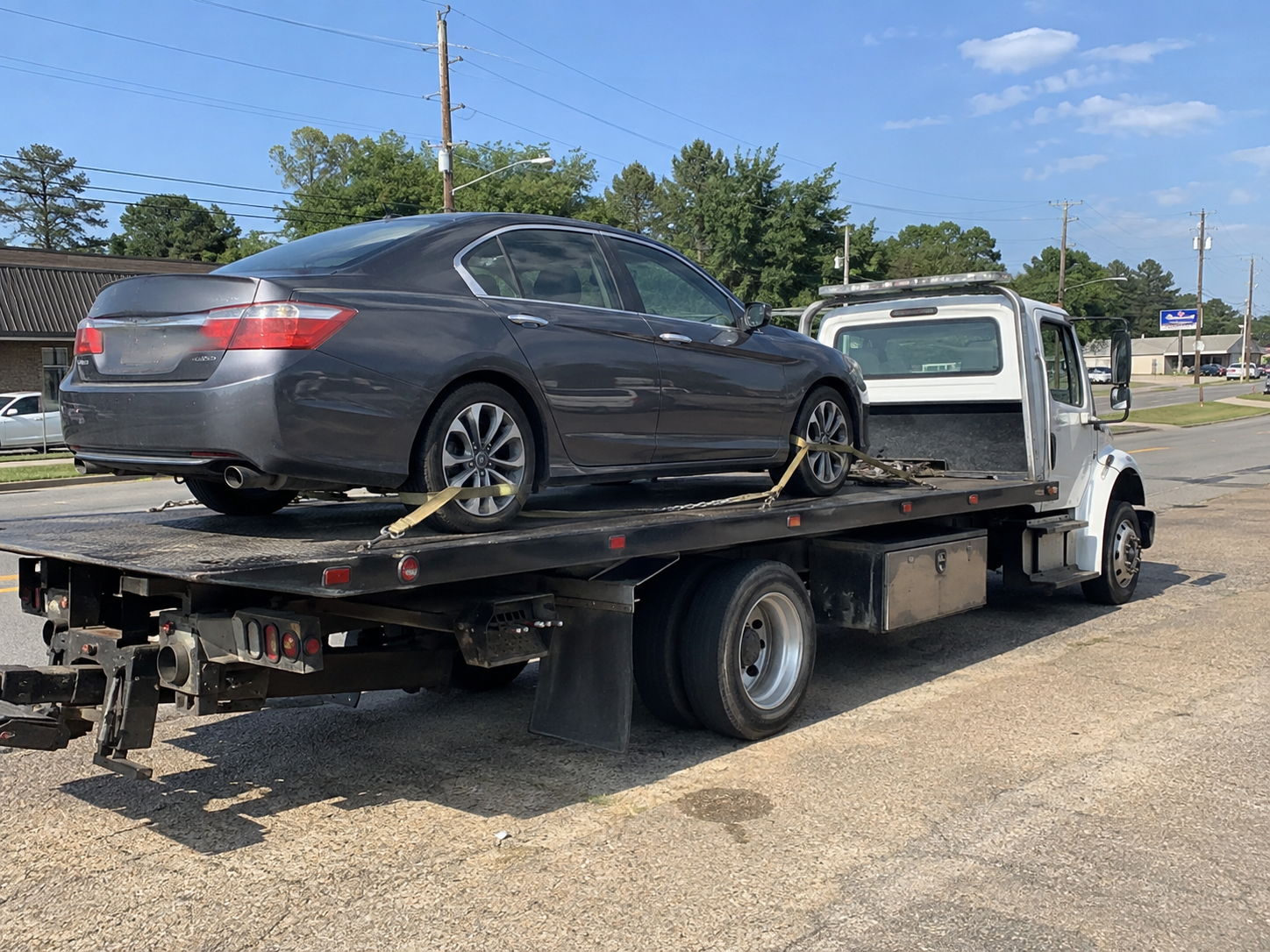
Before moving the vehicle, the towing method should match its condition. A straightforward breakdown may be handled differently from an AWD vehicle, a low-clearance car, or a vehicle with accident damage. In some cases, flatbed towing is the safer choice because all four wheels remain off the road.
Once loaded and secured, the vehicle can be transported to a repair shop, dealership, residence, storage facility, or another appropriate destination. The goal is to move the vehicle without adding unnecessary damage while giving the driver a clear next step after the breakdown.
When a Breakdown Means Your Vehicle Should Be Towed
A mechanical problem can leave a vehicle stopped in places that are difficult or unsafe, including the shoulder of I-79, I-68, a busy Morgantown street, a parking lot, or a residential road. Common causes include overheating, electrical failure, transmission problems, damaged belts or hoses, and other mechanical issues that make continued driving unsafe.
Morgantown Towing can transport vehicles that are no longer safe to operate. The towing method depends on the condition of the vehicle, its drivetrain, ground clearance, and whether the wheels can roll normally. A standard tow may work for some breakdowns, while AWD vehicles, low-clearance cars, or vehicles with damaged wheels may be better suited for flatbed transport.
What Information Should You Have Ready?
Providing a few details when you call can make it easier to determine what equipment is needed before the tow truck arrives. Helpful information includes:
- Your exact location or nearby landmark
- Vehicle year, make, and model
- Whether the vehicle starts or moves
- Any visible damage, warning lights, leaks, or unusual noises
- Whether the vehicle is AWD, 4WD, front-wheel drive, or rear-wheel drive if known
- Where you want the vehicle transported
The more accurately the situation can be described, the easier it is to choose the appropriate towing method and avoid delays once the truck reaches your location.
Collision and Accident Towing
A vehicle can sometimes look drivable after an accident even when important components have been damaged. Problems with the steering, suspension, wheels, tires, cooling system, or body structure may make it unsafe to continue driving. Morgantown Towing can remove a disabled vehicle from the scene and transport it to a repair shop, body shop, storage facility, residence, or another appropriate destination.
The condition of the vehicle determines how it should be moved. If a wheel is damaged, the suspension is compromised, or the vehicle cannot roll normally, flatbed towing may be the safer option. Proper loading and securement are especially important when the vehicle has collision damage that changes how it sits or moves.
After a crash, focus on personal safety first. If possible, move away from active traffic and follow instructions from police, fire, or other emergency personnel at the scene. Do not attempt to drive a vehicle that is leaking fluid, producing smoke, has severe wheel damage, or does not steer or brake normally.
Once the immediate safety concerns have been handled, towing can take care of the vehicle itself. Our goal is to make that part of the process straightforward by determining what equipment is needed, securing the vehicle properly, and getting it to the destination you choose.
When Roadside Assistance Is Not Enough
Some roadside problems can be handled where the vehicle is stopped. A dead battery may only need a jump-start, and a flat tire may be resolved if you have a usable spare. Other situations are different. If the vehicle cannot be made safe to drive, towing is usually the better option.
A flat tire may require a tow if the wheel is damaged, there is no usable spare, or the vehicle is stopped somewhere too dangerous to perform a tire change. A dead battery can also turn into a towing situation if the vehicle still will not start after a jump. Running out of fuel is normally a simple roadside service, but if the engine still does not start after fuel is added, another mechanical problem may be involved.
The key question is not simply whether the vehicle can move. It is whether it can be driven safely without causing additional damage or creating a risk to you or other drivers. Warning signs such as leaking fluids, overheating, grinding noises, steering problems, damaged wheels, or collision damage are all reasons to avoid continuing the trip.
When roadside assistance cannot safely solve the problem, Morgantown Towing can transport the vehicle to a repair shop, dealership, residence, or another appropriate destination. This is especially important on busy routes such as I-79 and I-68 or on Morgantown’s steep local roads, where a disabled vehicle can quickly become a safety concern.
How We Determine the Right Way to Tow Your Vehicle
The safest towing method depends on more than the size of the vehicle. Drivetrain, ground clearance, wheel condition, accident damage, and the location of the vehicle all affect how it should be loaded and transported. A low-clearance car, AWD vehicle, or vehicle with damaged suspension may require a different approach than a car with a simple mechanical breakdown.
Before transport, we consider whether the vehicle can roll normally, whether any wheels or steering components are damaged, and whether flatbed towing would reduce the risk of additional damage. These details matter even more on Morgantown’s steep streets, tight residential roads, and uneven terrain, where proper positioning and securement are important throughout the tow.
Once the appropriate method is chosen, the vehicle is loaded, secured, and checked before transport begins. Our goal is to move it to the requested repair shop, dealership, residence, storage facility, or other destination without creating additional problems along the way.
Careful towing is not about using the same process for every vehicle. It is about understanding the condition of the vehicle, choosing the equipment that fits the situation, and paying attention to the details from pickup through final drop-off.
What Happens When You Request an Emergency Tow
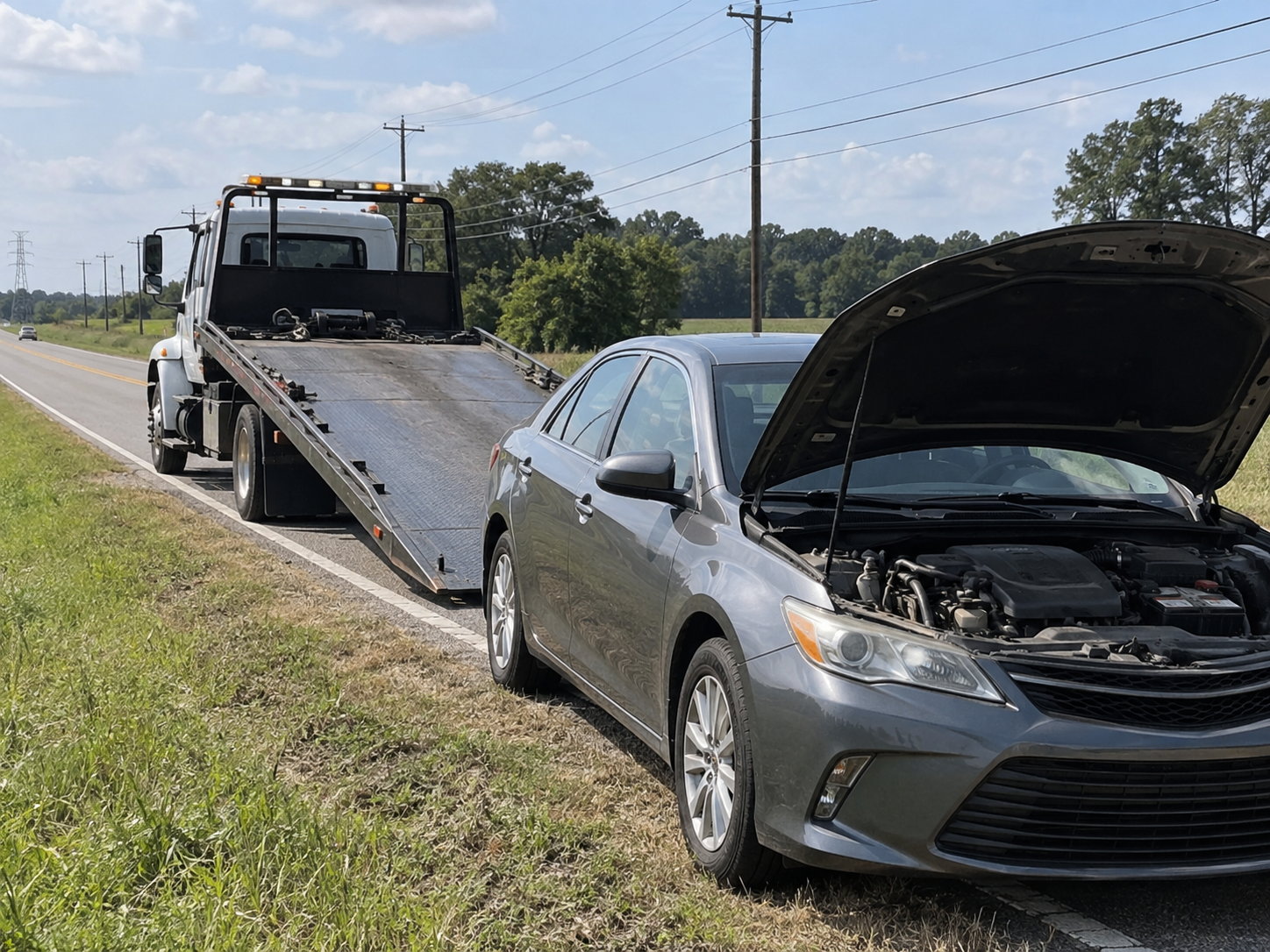
The more accurately you can describe the situation, the easier it is to send the right type of equipment. When you call, be ready to provide your location, vehicle year, make and model, what caused the vehicle to stop, and where you would like it transported.
If you are along I-79, I-68, or another busy road around Morgantown, a nearby exit, intersection, business, or landmark can make your location easier to identify. It is also helpful to mention whether the vehicle is on the shoulder, in a parking garage, down an embankment, or in another difficult-access location.
For accident-damaged vehicles, describe anything that could affect loading, such as damaged wheels, leaking fluids, steering problems, deployed airbags, or body panels contacting the tires. Those details help determine whether a flatbed, winching, or another recovery method may be appropriate.
Once the towing method and destination are established, the vehicle can be loaded, secured, and transported. Clear communication before the truck arrives reduces delays and helps make the pickup more straightforward.
Choosing the Right Towing Service for the Situation
The right towing company should do more than simply move the vehicle. It should be able to determine how the vehicle can be transported without creating additional damage and explain what the process will involve.
That matters in Morgantown because towing conditions vary considerably. A disabled commuter vehicle near WVU may require a different approach than an accident-damaged SUV on I-68 or an AWD vehicle stopped on a steep residential street. Drivetrain, ground clearance, wheel damage, accessibility, and the condition of the road can all affect how a tow should be performed.
Morgantown Towing focuses on matching the equipment to the situation, securing the vehicle properly, and keeping the customer informed about where the vehicle is going and what happens next. If roadside assistance can safely solve the problem without a tow, that may be the more practical option. If the vehicle cannot be driven safely, we can help arrange transportation to the appropriate destination.
Need Emergency Towing in Morgantown?
A breakdown or collision can interrupt your trip without warning, but the next step should be straightforward. If your vehicle cannot be driven safely because of mechanical failure, accident damage, a damaged wheel, or another serious problem, Morgantown Towing can help move it to a safer location.
Emergency towing is available for drivers throughout Morgantown, including situations along I-79, I-68, local streets, parking areas, and residential neighborhoods. When you call, let us know where the vehicle is located, what happened, and where you want it taken. From there, we can determine the appropriate towing method and help get the vehicle transported safely.